Lucky 15 Bets: How They Are Settled When a Horse Is a Non-Runner
By the Bet at editorial teamUpdated 18+ · T&Cs apply to all offers
On this page
How we compare sitesAffiliate links: we may earn a commission18+ onlyUKGC-licensed operators
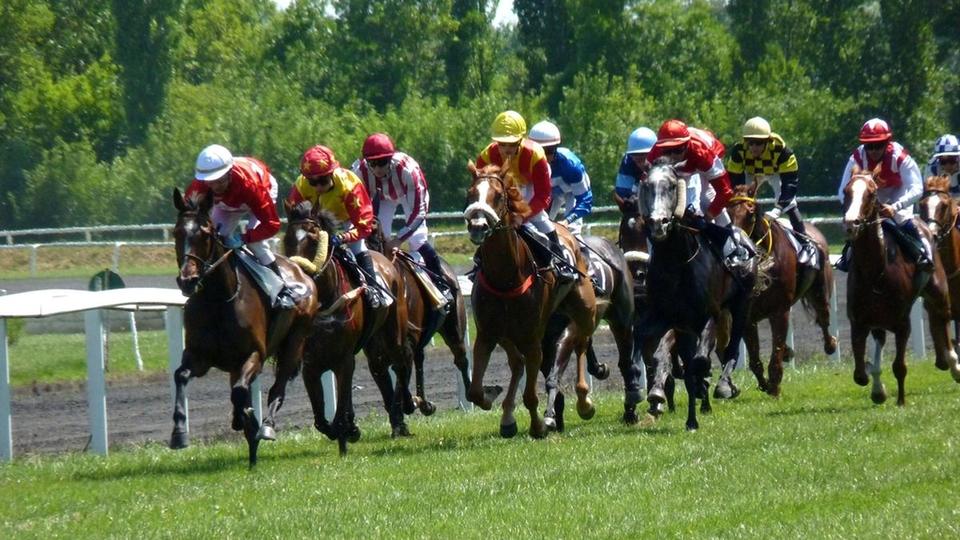
A Lucky 15 contains 15 separate lines across four selections: four singles, six doubles, four trebles and one fourfold. When one of those horses is withdrawn, the bet does not collapse, because the non-runner is voided and the remaining combinations are recalculated.
The 15 lines inside a £15 stake
A £1 Lucky 15 costs £15 in total, Standard betting guides state. That is simply the 15 lines multiplied by the £1 unit stake. The structure is fixed: every selection appears in one single, three doubles, three trebles and the fourfold. For a £1 unit, the four singles account for £4, the six doubles £6, the four trebles £4, and the fourfold £1.
An each-way version does not simply add a few place lines. Standard betting calculators record that an each-way Lucky 15 doubles the number of bets to 30, because each line splits into a win part and a place part. A £1 each-way unit stake therefore costs £30, not £15. That changes the arithmetic before a non-runner is even considered.
What one withdrawn horse does
Standard betting rules set out the basic settlement mechanic. If one selection is a non-runner, it is treated as void and the remaining combinations are recalculated. The single on that selection is refunded. The doubles, trebles and fourfolds that included the withdrawn horse are settled as if that leg had been priced at 1/1.
That may sound like a minor detail. It is the entire mechanism. A void leg in a multiple does not cancel the multiple; it drops out at evens, so the multiple becomes the next combination down: a double becomes a single, a treble becomes a double, the fourfold becomes a treble. Standard betting rules describe the practical result the same way: the bet is reduced to the remaining active lines, with the stake on the withdrawn horse returned.
Punters sometimes misread "void" as "the whole line is cancelled". That is not how the guides cited here explain it. Only the single on the withdrawn horse is returned; the other lines are recalculated, not deleted. That distinction matters because a treble can still pay as a double even when one of its legs never ran.
One published guide gives the full shape of what remains. One published guide says a Lucky 15 with one non-runner settles as six singles, six doubles and two trebles on the three runners. That is not the original 15-line structure, but it keeps all 15 original lines live or refunded: 14 are re-priced, and the withdrawn horse's single is returned.
The repricing arithmetic, step by step
Label four selections A, B, C and D, with D withdrawn. The single on D is returned. The three singles on A, B and C remain. So far, three live singles.
Now take the doubles that included D: AD, BD and CD. D is settled at 1/1, so each of those doubles becomes a single on the surviving leg. That adds three more singles, producing six singles in total. The doubles that never touched D, AB, AC and BC, remain doubles.
The trebles ABD, ACD and BCD lose D at evens and settle as doubles on AB, AC and BC. That adds three doubles, bringing the double count to six. The fourfold ABCD loses D and becomes a treble on ABC. Combined with the original treble on ABC, that leaves two trebles.
This produces the six singles, six doubles and two trebles breakdown. The arithmetic does not require a full set of prices; the conversion of the withdrawn leg to evens is what drives the reclassification. What the final payout is depends on the prices of A, B and C and on any Rule 4 adjustment still to come.
Rule 4 can reduce the winnings again
A non-runner does not only restructure the lines. If the horse is withdrawn after the bet is placed, Rule 4 deductions may apply to winnings. The Ladbrokes Help Centre describes Rule 4 as a deduction taken from winning returns when one or more horses are withdrawn after a bet has been placed.
The deduction is not a flat percentage. It depends on the price of the withdrawn horse at the time the bet was placed. Ladbrokes lists no Rule 4 deduction for a withdrawn horse priced over 14/1. A short-priced withdrawal triggers a deduction; a long-priced one may not.
That means two separate adjustments can hit the same Lucky 15. First, the void leg is re-priced at 1/1. Then Rule 4 may remove a further slice from the surviving returns. The timing matters: the rule applies when the withdrawal happens after the bet has been struck, not when a horse was already a non-runner at the time of placement.
Bonuses and each-way stakes
Some bookmakers advertise Lucky 15 consolation or bonus payments, but the terms vary by bookmaker. There is no single industry-wide bonus rule. One firm may pay a bonus when all four selections win; another may pay a consolation when only one leg lands. The withdrawn runner can affect whether those triggers are met, so the settlement figure depends on the individual bookmaker's terms.
The bonus is not a Rule 4 offset. It is a separate promotional payment, and its terms should be read before the bet is struck. A punter who assumes a standard Lucky 15 bonus will often be wrong.
The each-way version adds another layer. An each-way Lucky 15 has 30 bets because every win line has a corresponding place line. At a £1 each-way unit stake, the total outlay is £30, as standard betting calculators confirm. A non-runner in an each-way Lucky 15 voids both the win and place parts of the lines involving that selection, so the same re-pricing logic applies on each side.
Settlement is therefore not just a matter of the non-runner. What you are paid depends on the void leg being re-priced at evens, on any Rule 4 deduction triggered by the withdrawn horse's price, and on the bookmaker's separate Lucky 15 bonus terms. A horse withdrawn at a big price can leave the surviving lines nearly intact; a short-priced withdrawal can cut the return before any bonus is added.
More from the blog
 Horse RacingTote Placepot and Jackpot: How UK Pool Betting Works
That is the entire bargain with Tote pool betting, and it is the thing anyone coming from fixed-odds wagering finds…
 Horse RacingStarting Price vs Best Odds Guaranteed: Which Price Your Horse Bet Gets
A horse bet can settle at one of two numbers: the fixed early price you took when placing the bet, or the official…
 Safer GamblingGAMSTOP Explained: How UK Self-Exclusion Works and What It Covers
On 31 March 2020 every online gambling operator licensed in Great Britain was ordered to join GAMSTOP. The service is…