Dead Heat Rules in Betting: How a Tie Is Settled and Why You Get Less
By the Bet at editorial teamUpdated 18+ · T&Cs apply to all offers
On this page
- The Settlement Rule Every Bookmaker Follows
- The Calculation: Halving the Stake, Halving the Return
- Golf, Top Goalscorer and the Markets Where Ties Are Everywhere
- When Dead Heat Rules Take a Seat: Tie Selections, Playoffs and Full Payouts
- Dead Heat FAQs: More Than Two Tied, Bookmaker Diffferences and the Below-Stake…
How we compare sitesAffiliate links: we may earn a commission18+ onlyUKGC-licensed operators
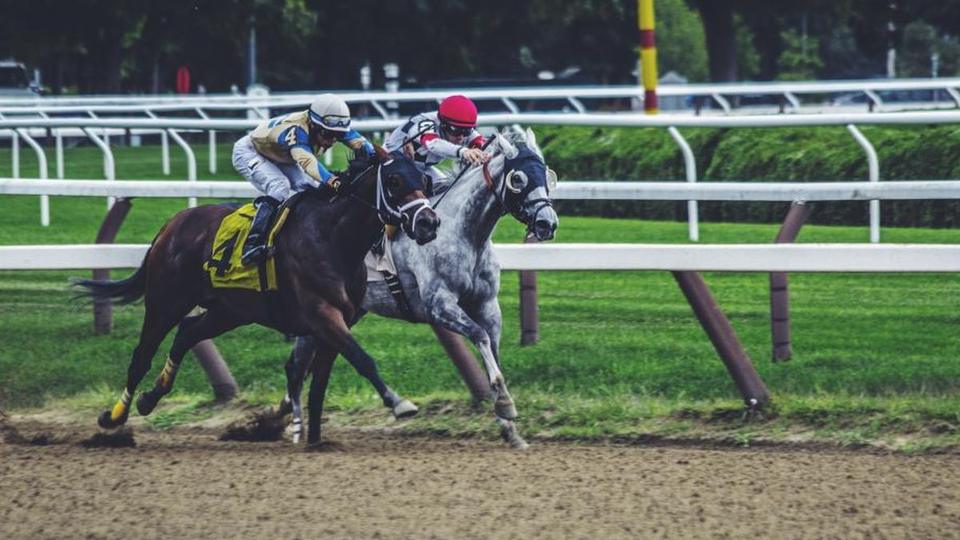
A winning bet is supposed to land you more money than you put down. Dead heat rules break that expectation routinely. When two or more competitors share the same finishing position, your stake is cut to match their share of the tie, and if the odds are short enough, you collect less than you risked. The rule is common across British bookmakers, and it catches out plenty of punters who never read the small print until their return lands in the account. Ladbrokes’ dead heat terms hit the point directly: the stake on a winning selection is divided by the number of winners in the dead heat, full odds are paid to that smaller stake, and the rest of the money is lost. Sky Bet and Paddy Power word it almost identically. It is not a punishment for picking a co-winner; it is an arithmetic consequence of settling a bet on an outcome that turned out to be partial.
The Settlement Rule Every Bookmaker Follows
A dead heat is exactly what it sounds like: two or more entries cannot be separated at the line or on the leaderboard. In horse racing, a photo finish that the judge calls a tie triggers it. In golf, two players sharing fifth place in a top-five market do the same. The condition does not require that the tie be for first place; it applies to any position the bet references unless the market rules state otherwise.
Sky Bet spells out the process plainly. When two selections are joint winners, dead heat rules are used. The total stake is divided by the number of competitors in the dead heat, then multiplied by the odds at which the bet was placed. If that number is two, half the stake runs at full odds and the other half is gone. With three tied, a third of the stake rides and two-thirds evaporates. The formula scales arithmetically, not by any judgment about who “deserved” it. The Tasmanian Racing Regulation and Integrity Regulations 2024 apply a similar logic for certain pari-mutuel-style bets: a bettor must be paid one-half of the face value of the betting ticket if there is a dead heat for the named place. The bookmaker approach, while not statutory in the UK, mirrors that fifty-fifty settlement for two-way ties and extends it proportionally for larger groups.
The core idea is simple and non-negotiable: you did not back a sole winner, so you do not get a sole winner’s return.
The Calculation: Halving the Stake, Halving the Return
The numbers make the cold logic clear. Suppose you place a £20 win bet on a horse at 4/5. Two horses hit the wire together and the judge declares a dead heat. Under Sky Bet’s explicit guidance — half the stake applied at full odds, the other half lost — your £20 becomes a £10 wager. At 4/5, a winning £10 bet returns £18 (£8 profit plus the £10 riding stake). You walk away with £18 from a £20 outlay. That is a correct settlement, not an error, and it is the part that shocks bettors who assumed a “win” means at least their money back.
The short-odds trap is the same in every sport. The PGA Tour gives a golf example that lands with the same thud: a $100 top-10 bet at +200, when the player finishes tied 10th with two others, pays as if only $33.33 were wagered — the stake divided by three — and the rest of the $100 is lost. If the odds had been +150, the return would dip below the original hundred. Ladbrokes’ definition, where the remainder of the stake money is lost, covers every dead heat across every market that does not list a tie option.
When more than two dead-heat, the proportion follows the count. Sky Bet confirms that for three it is a third, for four a quarter, and so on. No rounding favours the bettor; the bookmaker works to the exact division. A £5 each-way bet that lands in a four-way tie for a place sees the place portion cut to £1.25, and if the place odds are 1/4 of the win odds, a 4/5 shot yields a tiny fraction back.
Golf, Top Goalscorer and the Markets Where Ties Are Everywhere
Dead heat rules do not catch only horseplayers. They sit permanently in golf top-finish markets, top-tournament goalscorer bets and any sport where rankings are a function of a final leaderboard without a tie breaker. Paddy Power’s golf rules are almost identical to the horse racing wording: the stake money on a selection is divided by the number of runners involved in the dead heat, full odds paid to the divided stake, the rest lost. Most bookmakers apply the reduction to every bet with multiple winning selections, unless the market offers “Tie,” the bet specifies “Including ties,” or a playoff or tie breaker from the event’s official governing body intervenes.
Top goalscorer markets operate under the same framework. When the World Cup’s Golden Boot is shared, a bet on a co-leader is settled exactly as a joint-champion would be: stake divided by the number of joint winners, odds applied to that sliver. No special top-goalscorer carve-out is mentioned in the standard terms of the major British bookmakers; the dead heat clause governs unless the market description says otherwise.
The distinction between first and “place” ties is stark in golf. Ladbrokes explicitly notes that there generally will not be a dead heat for first place in a golf tournament because a playoff determines the winner. If the playoff happens, bets on the playoff winner are settled as a conventional victory; bets on the loser of the playoff are settled as lost, not dead-heated. The tie-settlement machinery moves down to the place and top-finish bands, where a three-way tie for tenth in a top-10 market triggers the same stake-dividing arithmetic.
When Dead Heat Rules Take a Seat: Tie Selections, Playoffs and Full Payouts
The fine print contains three escape hatches that stop the split-stake formula from applying. Bookmaker terms typically settle bets on “Tie” as won and bets on the other selections as lost if the market offered Tie as a selection. Sky Bet states dead heat rules do not apply when the tie or draw is offered in the market. That exception covers outright tournament win markets that list a “Dead Heat” or “Tie” price, and it extends to match-betting where a draw is a standard leg. In those cases, the tie is a declared outcome and punters who backed it collect in full; those who backed one side lose with no half-measure.
The second exception is the playoff. When a sport’s governing body uses a tie breaker — extra holes in golf, a penalty-shootout in football tournament bets — the playoff winner is the sole winner for betting purposes. Ladbrokes’ golf note makes that explicit. A dead heat rule never fires if a tie is broken by the rules of the competition itself.
The third is a market-specific promise: “Including ties” wording on the bet slip overrides the standard dead heat reduction. Some bookmakers offer it, and while it is not a common offering across all sports, it appears in some specials markets. Outside these three carve-outs, the split-stake engine runs.
Dead Heat FAQs: More Than Two Tied, Bookmaker Diffferences and the Below-Stake Surprise
What if three or more dead-heat? The stake is divided by the number tied. Sky Bet’s guidance is that the stake is proportioned accordingly. A four-way dead heat for a fifth-place finish reduces the place money to a quarter of the original unit, and the three remaining quarter-s of the stake are gone. The math is consistent but can be harsh.
Do bookmakers settle dead heats differently? The core formula — divide the stake, pay full odds on that slice, discard the rest — is written into the terms of Ladbrokes, Sky Bet and Paddy Power in near-identical language. The practical differences lie in the exceptions: whether Tie is offered, how “place” is defined for multi-runner ties, and whether a sport’s official tie breaker is recognised. The arithmetic, once triggered, is the same.
Why can my return be lower than my stake? Because the winning part of the wager has to earn back the portion that was forfeited. If the odds are short, even the reduced stake cannot generate enough profit to cover the lost slice. At 4/5 with a two-way tie, a £10 bet earns £8 profit, but the other £10 is gone, so the total return is £18 against a £20 stake. At 2/5, the return would be £14. The rule does not care that the result “felt” like a win; it cares that the bet was only half-right. Once you see it as a stake-allocation rule rather than a punitive deduction, the numbers hold no mystique — just a warning to check the odds before you cheer a photo.
More from the blog
 Horse RacingTote Placepot and Jackpot: How UK Pool Betting Works
That is the entire bargain with Tote pool betting, and it is the thing anyone coming from fixed-odds wagering finds…
 Horse RacingStarting Price vs Best Odds Guaranteed: Which Price Your Horse Bet Gets
A horse bet can settle at one of two numbers: the fixed early price you took when placing the bet, or the official…
 Horse RacingLucky 15 Bets: How They Are Settled When a Horse Is a Non-Runner
A Lucky 15 contains 15 separate lines across four selections: four singles, six doubles, four trebles and one fourfold…