Each-Way Place Terms: How Many Places Are Paid and at What Fraction
By the Bet at editorial teamUpdated 18+ · T&Cs apply to all offers
On this page
How we compare sitesAffiliate links: we may earn a commission18+ onlyUKGC-licensed operators
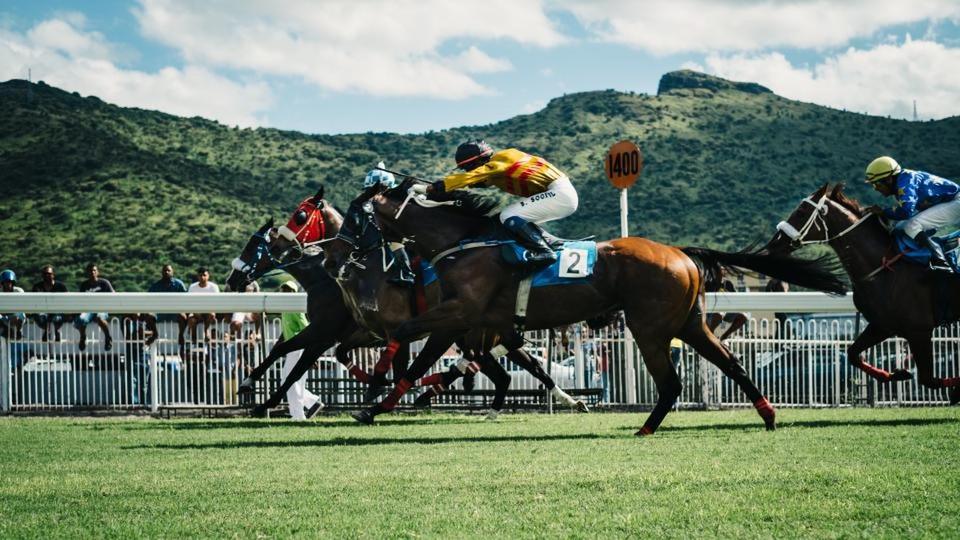
A £2 each-way bet on a horse is not one wager. It is two. The first half goes on the horse to win, the second on the horse to finish in one of the places, and the two halves are settled entirely separately. That separation matters more than most punters realise, because the number of places paid and the fraction of the win odds used for the place part are not a fixed promise. They are set by the field size and the type of race, and they can change between the time you strike the bet and the moment the stalls open.
How the Two Halves Work
An each-way bet splits your stake equally. A £2 each-way outlay costs £4: £2 on the win, £2 on the place. The Jockey Club’s betting guide gives the basic arithmetic. If a horse wins at 4/1, the win part returns £8; the place part adds another slice, settled at either a quarter or a fifth of those odds depending on race conditions. The two returns are calculated separately and then added together. If the horse does not win but occupies a paid place, the win part is lost. You collect only on the place leg at a reduced fraction of the starting price.
Because the place bet is a standalone wager, its return can be less than the total stake you handed over. Punters who treat the each-way tick as a blanket safety net often discover that fact only when the slip is already in the bin.
The Standard Place Terms by Field Size
The Tattersalls Committee rules underpin every racecourse in Britain. They set the settlement code.
Fewer than 3 runners? All bets are win only. Three or four runners? Win only – there is no place market. Sky Bet’s horse racing rules say the same thing.
From 5 to 7 runners the place terms become a quarter the odds on the first two home. William Hill and the Tattersalls rules agree on that line. At 8 or more runners in a non-handicap, the fraction drops to a fifth the odds but the number of places rises to three. That’s the standard for non-handicaps.
Handicaps shift the goalposts. William Hill’s published guide has handicaps of 12–15 runners paying 1/4 odds on the first three. For 16 or more runners, it is 1/4 odds on the first four. The Tattersalls Committee splits the band further. Handicaps of 12–15 runners: 1/4 odds, first three. Handicaps of 16 to 21 runners: 1/5 odds, first four. Handicaps with 22 or more runners: 1/4 odds on the first four. That last band is crucial. In a 22-runner handicap the fraction returns to a quarter, making a fourth-place finish worth materially more than it would be under a fifth-odds term. Big-field handicaps become prime each-way territory for exactly that reason.
All settlements, the Tattersalls rules state, are based on the actual number of starters unless the bookmaker has clearly displayed alternative terms. That rule is crucial for each-way backers.
A Worked Example: When a Placed Horse Still Loses Money
Take an 8-runner non-handicap where the place terms are a fifth the odds, first three. You put a £2 each-way bet on a 2/1 chance. Total outlay is £4. The horse finishes third. The win half is gone. The place half is settled at 2/1 divided by five, which is 0.4/1. The £2 place stake returns £2.80. Overall loss: £1.20. If the same horse had been a 4/1 shot, the place return would climb to £3.60 – still a 40p loss on the £4 total.
The arithmetic becomes friendlier as the win odds rise. At a fifth the odds, a bet on a 5/1 horse that places returns exactly £4 on the place part, restoring the total stake while the win part is lost. At a quarter the odds, the break-even win price is 4/1. Below those thresholds, a placed horse costs you money even though the slip is technically a winner. A placed return can still shrink the balance.
Non-Runners Can Change the Game
Because the Tattersalls rules settle each-way bets on the actual number of starters, a late withdrawal can redraw the place map. A 9-runner non-handicap that loses one horse after the bet is struck becomes an 8-runner contest – still three places, still a fifth the odds – but if a second runner is scratched and the field drops to 7, the place market suddenly shrinks to two places. The change is automatic. The bookmaker does not need to announce it.
Smaller fields cut deeper. If a race scheduled for 5 runners goes to post with 4, the each-way portion of every bet is voided and the whole stake becomes win only, because 3 or 4 runners are all to win under Tattersalls and Sky Bet rules. The Jockey Club’s guidance echoes this: fewer than 3 runners, win only. The each-way bet is only as good as the number of horses that actually line up.
When Each-Way Makes Sense
Each-way bet ting is not a strategy for every price. It works when the win odds are long enough that the place return, at the prevailing fraction, more than covers the lost win stake, or when the extra places on offer increase the probability of a collect. In a Tattersalls handicap of 22 or more runners paying four places at a quarter the odds, a 10/1 shot that finishes fourth returns £5 on the place half – a £1 profit on the £4 outlay. In a 5–7 runner field paying two places at a quarter the odds, only the first two produce a return, and a 3/1 chance that grabs second delivers just £3.50, still a 50p loss.
Bettors should compare the win price with the place fraction and paid places. The Jockey Club’s simple arithmetic – win part at the full SP, place part at a fraction – is only the starting point. The decision turns on the field size and whether the bookmaker is offering the Tattersalls terms or something narrower. That is why checking place terms matters.
FAQ: Quick Answers on Place Betting
What does “place only” mean? That is the portion of an each-way bet that pays out when your horse finishes in a paid place without winning. If you bet £2 each-way, the place-only bet is the second £2. It is settled at the place fraction – a quarter or a fifth of the win odds – and pays only if the horse is among the top finishers according to the race’s place terms.
What is “1/4 odds”? It is the most common fraction for place payouts. If your horse’s starting price is 10/1 and the place terms are a quarter the odds, the place return is calculated at 2.5/1. A £1 place stake returns £3.50 including the stake. At a fifth the odds, a 10/1 shot returns £3 for a £1 stake.
Why do handicaps pay more places? Because they have larger fields on average. The standard rules increase the number of paid places as the number of runners grows, reflecting the greater difficulty of finishing in the top two or three. Handicaps of 16 or more runners routinely pay four places, and under Tattersalls rules a 22-runner handicap even moves the fraction back to a quarter odds on those four places. That extra generosity is why big-field handicaps draw so much each-way money.
The each-way bet is not always safer. It is only as safe as the specific place terms allow. A quarter-odds, two-place deal on a five-runner field is a different animal from a fifth-odds, four-place term on a 20-runner handicap, and a late withdrawal can turn the latter into the former in the time it takes a runner to be led back to the stables. What matters is not the bet type, but the arithmetic that sits behind it at the moment the race goes off.
More from the blog
 Horse RacingTote Placepot and Jackpot: How UK Pool Betting Works
That is the entire bargain with Tote pool betting, and it is the thing anyone coming from fixed-odds wagering finds…
 Horse RacingStarting Price vs Best Odds Guaranteed: Which Price Your Horse Bet Gets
A horse bet can settle at one of two numbers: the fixed early price you took when placing the bet, or the official…
 Horse RacingLucky 15 Bets: How They Are Settled When a Horse Is a Non-Runner
A Lucky 15 contains 15 separate lines across four selections: four singles, six doubles, four trebles and one fourfold…